Building & Land Use Code Compliance
Report a Potential Code Violation
If you believe a property or activity in unincorporated Thurston County may be in violation of County building, land use, or critical areas regulations, you may submit a complaint through the online reporting portal.
Report a Code Violation
Check if a Code Violation has been reported to the County
Before submitting a complaint, please have the following information available:
- Property address or location of the potential violation.
- Description of the activity or condition of concern.
- Supporting photographs or documentation, if available.
- Your name and contact information.
Complainants must provide their name and contact information. Anonymous complaints are not accepted. Providing contact information allows CPED staff to follow up for additional information or clarification when necessary.
Please note: Complaints are not accepted by telephone. Reports may be submitted online or in person during Code Compliance public office hours:
Office Hours: Monday and Wednesday, 10 a.m.–1 p.m. at 3000 Pacific Avenue SE, Olympia WA.
Advancing Building Safety, Responsible Land Use, and Environmental Protection
Thurston County's Community Planning & Economic Development (CPED) Department administers and enforces County regulations related to building, land use, and critical areas in unincorporated Thurston County.
The Code Compliance Program helps ensure that development and property use comply with applicable County codes, regulations, and permit requirements. This includes addressing concerns involving building construction, unpermitted development, land use activities, and potential impacts to critical areas and environmentally sensitive resources.
Our goal is to achieve voluntary compliance whenever possible through education, communication, and coordination with property owners. Enforcement efforts prioritize violations that pose the greatest risks to public health and safety, property, and the environment.
Types of Violations
Conducting construction or modification of structures without the required County permit or approval violates County Code.
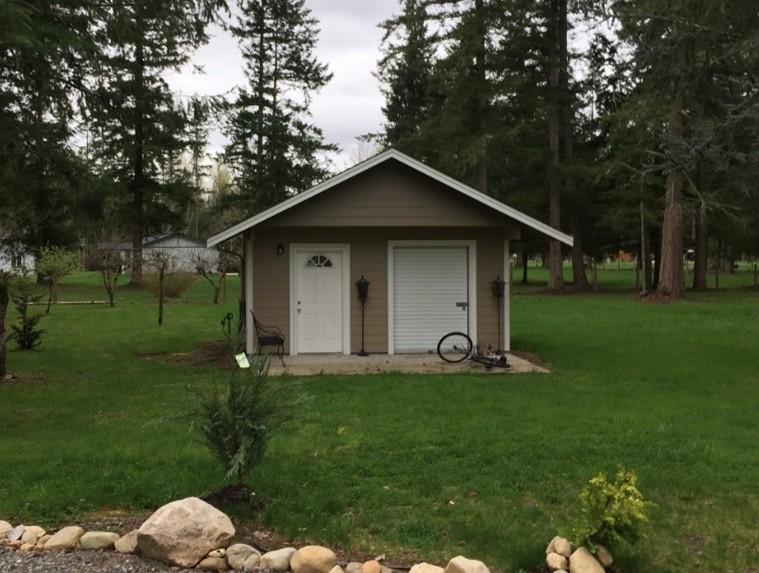
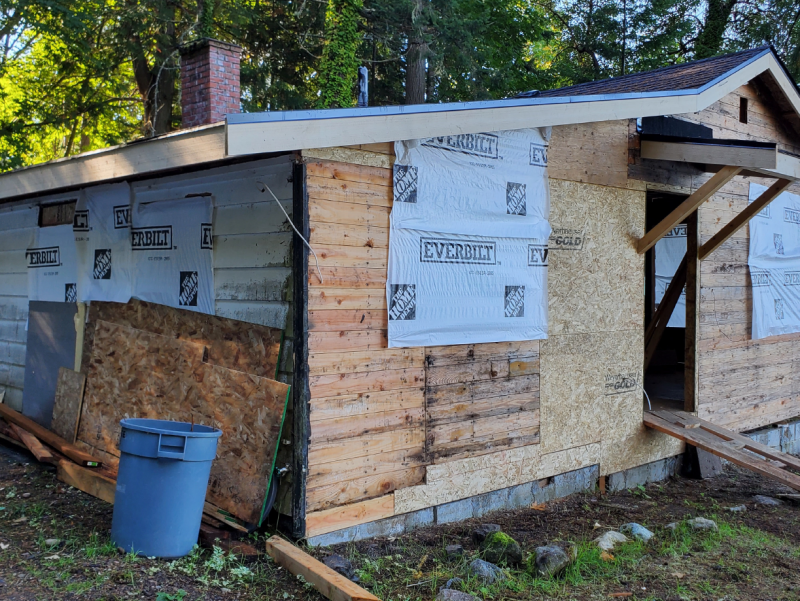
Please refer to 14.18.030 (1) for additional information.
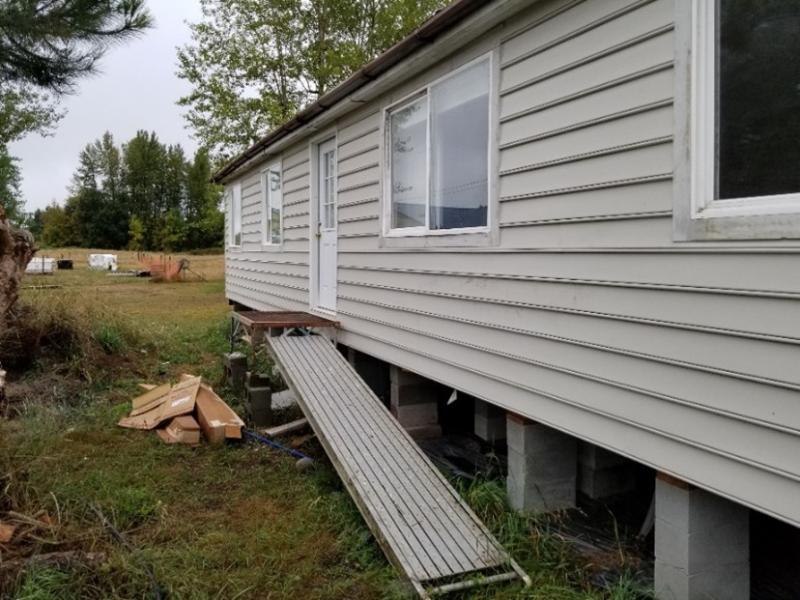
Placing a manufactured home without the required County permit or approval violates County Code.
Please refer to 14.44 for additional information.
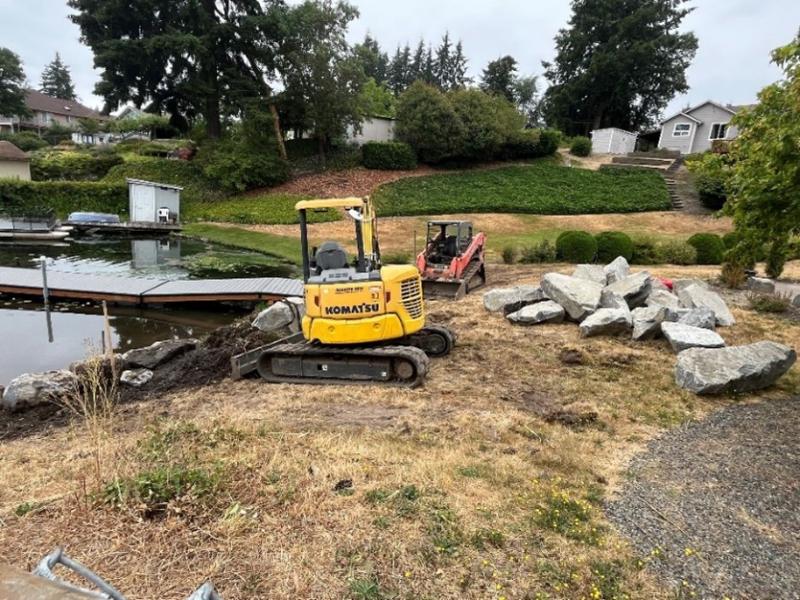
Conducting development in a shoreline area without the required County permit or approval violates County Code.
Please refer to Title 19 for additional information.
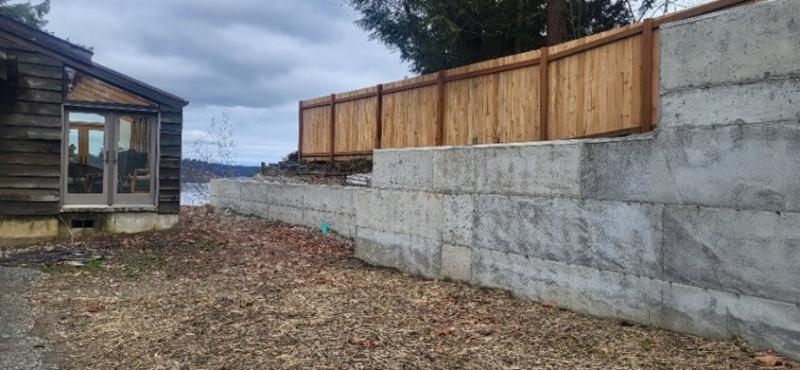
Installing fencing in a critical area without the required County permit or approval violates County Code.
Please refer to 24.60.040 for additional information.
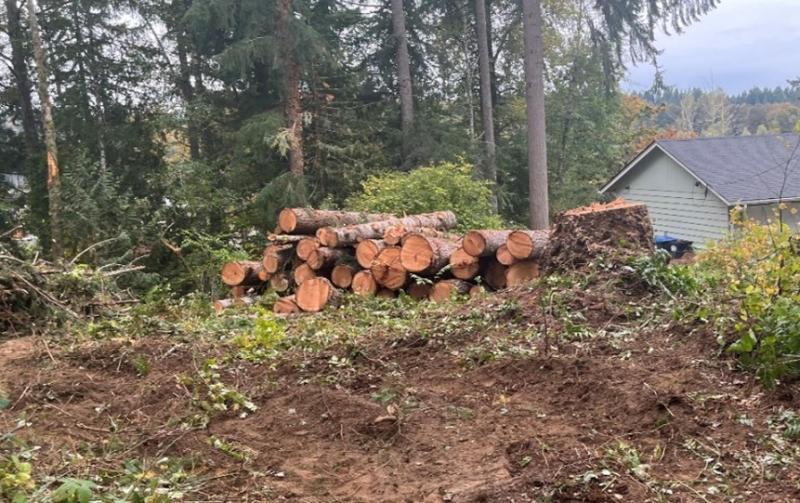
Conducting logging activities in excess of 5000 board feet or within critical areas without the required County permit or approval violates County Code.
Please refer to 17.25 for additional information.
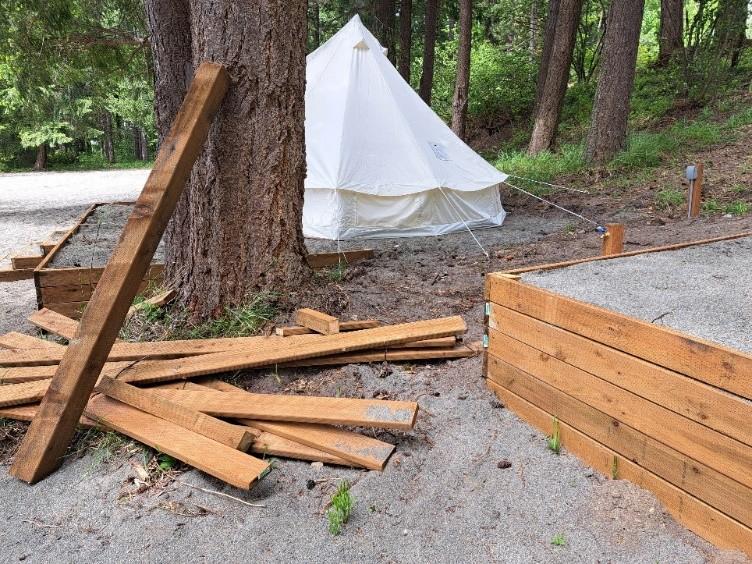
Operating a campground or RV park without the required County special use permit or approval violates County Code.
Please refer to 20.54.070 (4.5) for additional information.
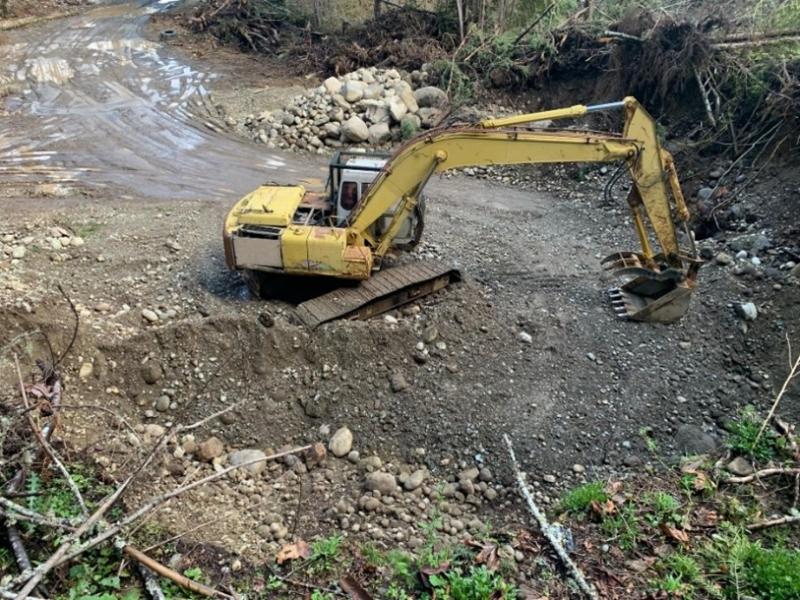
Performing clearing or grading of land without the required County permit or approval violates County Code.
Please refer to 14.37.030 (J103.2) for additional information.
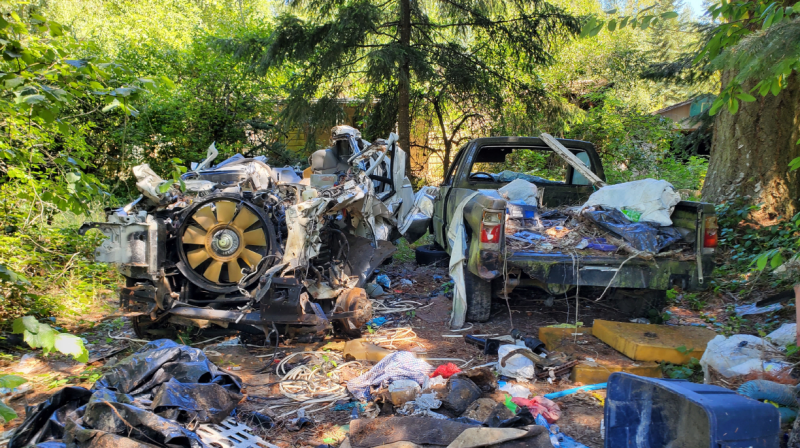
Storing junk vehicles without proper County approval, including exceeding allowed quantities, failing to screen them from public view, or storing them outside in restricted areas, violates County Code.
In rural areas, properties of one-half acre or less may have up to two junk vehicles, and properties above one-half acre may have up to four. In Lacey, Olympia, and Tumwater Urban Growth Areas, junk vehicles cannot be stored outside for more than 30 days, except for special interest vehicles actively being restored, which must be screened from the public right of way.
Please refer to 21.57.060 (C)(1-2), 22.40.060 (B)(1), and 23.40.060 (F)(4)(a) for additional information.
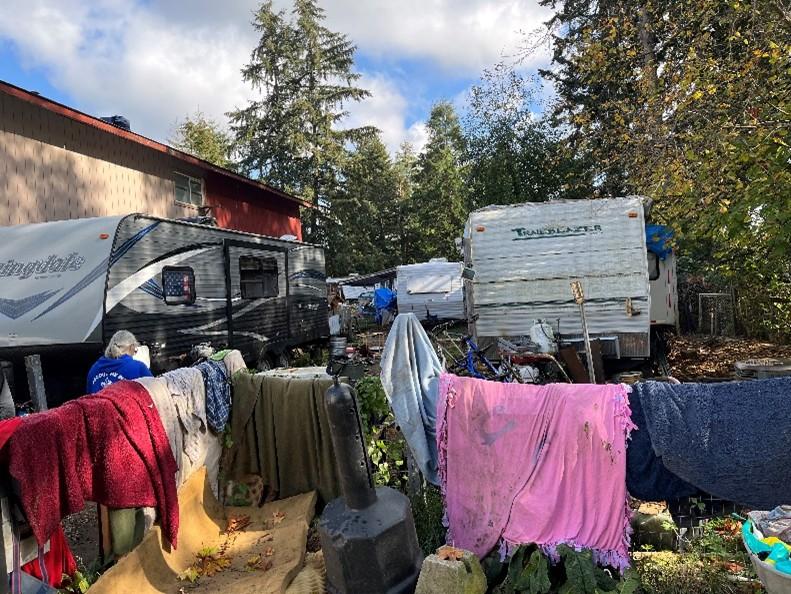
Occupying a recreational vehicle without the required County approval violates County Code.
Please refer to 24.34.030, 21.57.060 (C)(2), 22.40.060 (B)(2), and 23.04.040 (B)(1)(c) for additional information.
Something Else You’re Worried About?
A different department within the County may investigate these matters. Click below to report or learn more.
| Environmental Health: Sanitation, mold, wells, septic systems, food safety, and food trucks. |
| Air Quality: Smoke, pollutants, odors, and burn bans. |
| Law Enforcement: Criminal activity, noise complaints, trespassing. |
| Electrical Code: Permits and code violations for electrical work. |
What Happens After You Submit a Complaint?
All complaints undergo an initial review to determine whether the reported activity falls under County Code Compliance authority and to assess the potential risk to human health, public safety, and environmental resources.
Complaints are prioritized based on the severity of the potential violation, not solely on the date received.
Cases involving immediate safety concerns or active environmental damage receive the highest priority. Lower-risk complaints are addressed as staffing and resources allow.
If a violation is verified, the County may initiate enforcement action under Thurston County Code Title 26.
How Complaints are Prioritized
| Level I — Immediate Risk | Level II — Moderate Risk | Level III — Minimal Risk |
|---|---|---|
|
Potential violations involving immediate threats to human health, public safety, or significant environmental harm. Examples include active unpermitted construction, ongoing development within critical areas, and active shoreline disturbances. These cases receive priority review and response |
Potential violations that present moderate safety or environmental concerns but do not generally pose an immediate threat. Examples include certain unpermitted accessory structures, completed grading activities, and unauthorized land uses. Estimated timeframe for initial review or assignment: 3–6 months, depending on available resources. |
Potential violations involving minimal immediate risk to human health, safety, or environmental resources. Examples include certain minor land-use or property maintenance violations. Estimated timeframe for initial review or assignment: 6–12 months, depending on available resources.
|
Ways We Achieve Compliance
The County's enforcement process is designed to encourage voluntary compliance whenever possible. Enforcement actions generally follow a progressive approach, with each step representing an escalation in response to unresolved violations. Most property owners come forward after receiving an initial Notice of Violation and work with the County to correct the issue. As a result, many cases are resolved during the early stages of the process, without the need for additional enforcement action. More serious enforcement measures are less common and are generally reserved for cases where earlier efforts have been unsuccessful or additional intervention is warranted.
When a violation is confirmed, the County may issue a formal Notice of Violation identifying the applicable code requirements and necessary corrective actions.
Property owners are generally provided 30 days to correct the violation or take appropriate steps toward compliance.
This is typically the first formal step in the enforcement process. In most cases, property owners respond to the NOV by contacting the County, correcting the violation, or working toward an appropriate resolution. The County's primary goal at this stage is to educate property owners about the violation and provide a reasonable opportunity to achieve compliance without further enforcement action.
When appropriate, property owners may have the opportunity to enter into a Voluntary Compliance Agreement with the County.
A VCA establishes agreed-upon corrective actions and deadlines to bring the property into compliance. It may provide a structured path toward resolution without immediate escalation to additional penalties, provided the agreement is followed.
This step provides an opportunity to work collaboratively with the County and establish a clear plan for resolving the violation. It is generally used when additional time or a more structured approach is needed to achieve compliance.
If a violation remains unresolved and appropriate corrective action has not been taken, the County may issue a Notice of Civil Penalties in accordance with applicable County regulations.
Civil penalties may continue or increase as authorized by County Code until compliance is achieved.
This represents a more significant escalation in the enforcement process. Civil penalties are generally considered when earlier efforts to obtain voluntary compliance have been unsuccessful. Relatively few cases reach this stage, as many property owners resolve violations during the earlier steps of the process.
When administrative enforcement efforts are unsuccessful or additional legal intervention is warranted, the County may refer the matter to the Prosecuting Attorney's Office for review and consideration of further legal action.
This is among the most significant levels of enforcement and is generally reserved for more persistent, serious, or unresolved violations where additional legal intervention may be necessary. Referrals to the PAO are rare and are not a routine outcome of the enforcement process.
Matters that fall outside of Code Compliance and will not be investigated.
| Civil Disputes: Property line issues, unpaid bills, title disputes, landlord-tenant conflicts, foreclosure, contract breaches, or fraud. |
| Private Disputes: Personal disagreements or private contracts not involving County codes. |
| Routine Maintenance: Yard work, painting, landscaping, or cosmetic improvements that don’t violate codes. |
| Neighbor Complaints: Issues unrelated to code, noise, or aesthetics or personal preferences. |
| Permitted Work: Construction, electrical, or plumbing projects with valid permits and inspections. |
| Other Non-Code Concerns: Matters better handled by courts, mediators, or other agencies. |
Public Records Notice:
The information contained in complaints is a public record subject to disclosure under the Washington Public Records Act (RCW42.56) and may be requested and inspected by any person. The identity of a complaining party (complainant) may be withheld from public inspection at the Agency’s discretion if the complainant indicates that disclosure will endanger any person’s life, physical safety, or property. However, if a court case is filed as a result of this complaint, the complainant’s identity may be disclosed regardless of a request that it be withheld.